Purpose and location
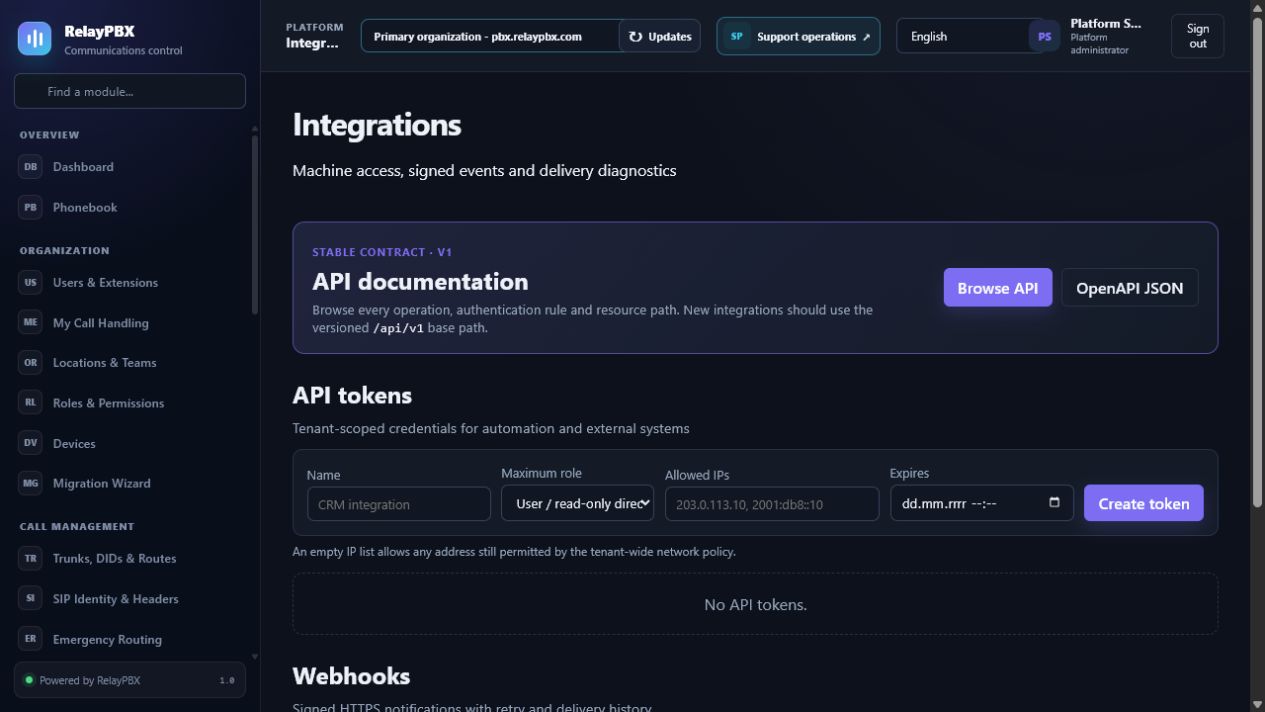
Manage scoped API access, webhooks and external service connections.
Open Platform → Integrations. The available controls depend on the active edition, module entitlement, role and tenant scope.
Before you start
Platform changes can affect every tenant. Confirm a recent verified backup, an audit owner and a maintenance window whenever the operation can restart services or change entitlement.
Capture the current value or export the affected records before a bulk or routing change. This gives the operator a precise comparison point and makes a supported transaction undo easier to assess.
Step-by-step workflow
Complete the steps in order. Do not combine an initial configuration with unrelated cleanup; small, attributable changes are easier to test and reverse.
- Create the minimum required scope.
- Store secrets in the configured secret provider.
- Validate endpoint TLS and signatures.
- Rotate credentials and review delivery failures.
Field reference
Use the reference below while completing the form. Fields hidden by edition, module entitlement or role are intentionally unavailable to the signed-in user.
- Integration type
- API token, webhook or supported service connector.
- Scopes
- Permitted modules and operations.
- Secret reference
- Pointer to protected credential material.
- Webhook events
- Event allowlist delivered externally.
- Delivery health
- Success, retry and terminal failure information.
Acceptance checks
A saved record is only the beginning of validation. Run every relevant check below and retain the call-session ID, time and result when telephony is involved.
- Confirm service health and tenant isolation after the change.
- Record the result, responsible operator and rollback point in the audit trail.
Common mistakes and safe recovery
If a check fails, stop adding changes. Restore the previous value or use a supported transaction undo, regenerate PBX configuration, then repeat the smallest failing test.
- Do not apply platform-wide changes without a tested return path and a recent verified backup.
What to include in a support case
Provide the tenant, module and object name, local time with timezone, expected result, observed result and the most recent successful state. For a call problem, include the logical call-session ID and the redacted SIP/SDP text diagnostic before requesting PCAP.
Never paste passwords, private keys, raw license payloads or unredacted customer media into a ticket. Use the one-time diagnostic grant and attachment controls when support requests additional evidence.